21 chapter-by-chapter flashcard sets, free to use
PRINCE2 Foundation Flashcards
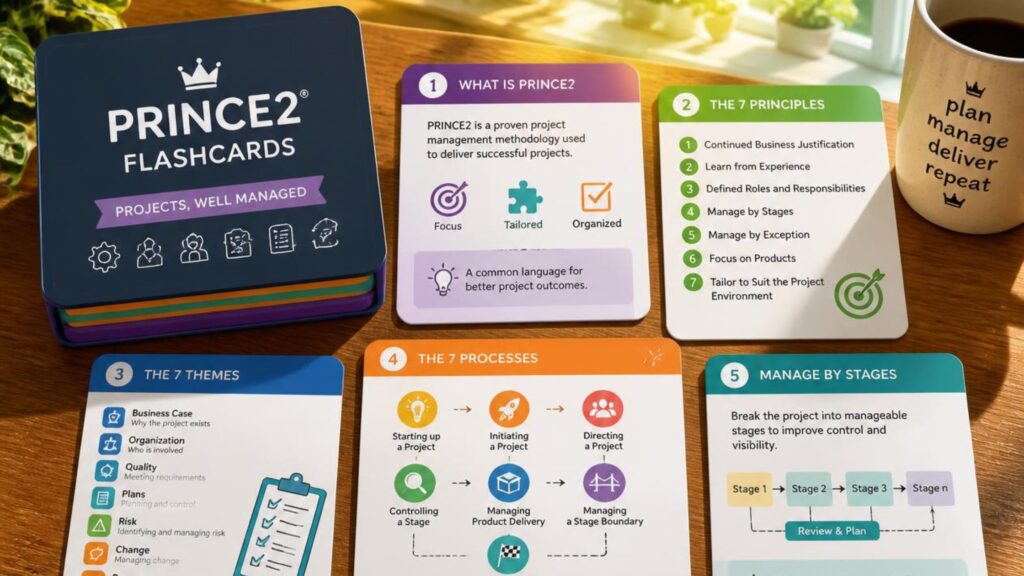
The page hosts Projects101 Academy‘s PRINCE2® 7th Edition Foundation flashcard hub to help learners revise for free. It features 21 sets, 315 cards, 7 core principles arranged in handbook order, from the Introduction and Principles through Practices, Processes, and the two appendices on Management Products and Role Descriptions, each linking to its own interactive flip-card page.
One chapter at a time. Flip to reveal. Zero cost.
Each flashcard set covers a single chapter or appendix of Managing Successful Projects with PRINCE2, from the seven principles through to the practices, processes and role descriptions. Work through them in order, or jump straight to the topic you need to revise.
George Mwika Kayange
Founder & Platform Admin
No one should pay to prepare for a certification that could change their career.
Meet the founderThis is an independent Projects101 Academy resource. It is not affiliated with, or endorsed by, PeopleCert or AXELOS. PRINCE2® is a registered trademark of the PeopleCert Group.
PRINCE2 Foundation Flashcards
Review key terms from Managing Successful Projects with PRINCE2, chapter by chapter. Pick any topic below and start flipping.
Introduction
Review key terms that explain what PRINCE2 is and why organisations use it.
Principles
Test your recall of the seven principles that guide every PRINCE2 project.
People
Revise terms about behaviours, communication and leadership within a project team.
Introduction to PRINCE2 Practices
Learn the terms that introduce the seven practices used throughout a project.
Business Case
Flip through cards on justifying, checking and maintaining a project's business case.
Organizing
Review the roles and reporting lines that make up a PRINCE2 project team.
Plans
Sharpen your recall of planning terms, from product-based planning to tolerances.
Quality
Master the terms behind defining, checking and controlling project quality.
Risk
Revise terms for identifying, assessing and responding to project risk.
Issues
Review terms for raising, assessing and resolving issues during a project.
Progress
Test your recall of terms used to monitor and control project progress.
Introduction to PRINCE2 Processes
Learn the terms that introduce the seven processes a project moves through.
Starting up a Project
Revise the terms behind checking that a project is worth starting.
Directing a Project
Review terms for how the project board guides and authorises a project.
Initiating a Project
Flip through cards on setting up solid foundations before work begins.
Controlling a Stage
Master the terms behind assigning work and tracking progress within a stage.
Managing Product Delivery
Review terms for agreeing, delivering and handing over project work packages.
Managing a Stage Boundary
Revise terms for reviewing a stage and planning ahead to the next one.
Closing a Project
Learn the language of confirming delivery and formally closing a project.
Appendix A: Management Products
Round off your revision with terms covering all the baseline and record products.
Appendix B: Role Descriptions
Review the responsibilities behind each role in a PRINCE2 project team.
Disclaimer
Projects101 Academy is an independent education and training initiative. We are not affiliated with, accredited by, sponsored by, or endorsed by PeopleCert, the certification body for PRINCE2® and the AXELOS portfolio.
PeopleCert is the official owner and examination body for PRINCE2®, including the Managing Successful Projects with PRINCE2® guidance, exam content, and ongoing development of the method.
The flashcards, study materials, and other resources offered by Projects101 Academy are developed independently for educational purposes and have not been reviewed, approved, certified, or endorsed by PeopleCert. Working through our flashcards does not constitute official training from, or guarantee certification by, PeopleCert.
All trademarks, service marks, and registered trademarks, including PRINCE2® and the PeopleCert name and logo, remain the property of their respective owners. References to these marks are used solely for identification, educational, and descriptive purposes.